
Why Real-Time Loan Tracking Matters for Financial Institutions
Introduction
The lending landscape across commercial banks, credit unions, and non-banking financial institutions is undergoing a major structural shift. Driven by changing borrower expectations, heightened regulatory scrutiny, and competitive pressures from agile fintech platforms, financial organizations can no longer rely on slow, manual credit management processes. Today, borrowers expect the same immediate transparency from their financial providers that they experience with modern consumer technology applications.
At the core of this operational evolution is the deployment of real-time loan tracking. Moving away from end-of-day batch processing and disconnected spreadsheets, real-time monitoring gives financial institutions instant visibility across the entire credit lifecycle. From the moment an application is submitted through underwriting, funding, monthly servicing, and final payoff, instant data tracking eliminates operational blind spots.
In this comprehensive guide, we will explore why adopting a modern loan tracking software architecture is essential for commercial lenders. Readers will learn how continuous loan data monitoring reduces default rates, accelerates approval timelines, optimizes back-office workflows, and provides executive leadership with actionable portfolio insights.
The Evolution of Loan Tracking in Financial Institutions
The Operational Friction of Legacy Batch Processing
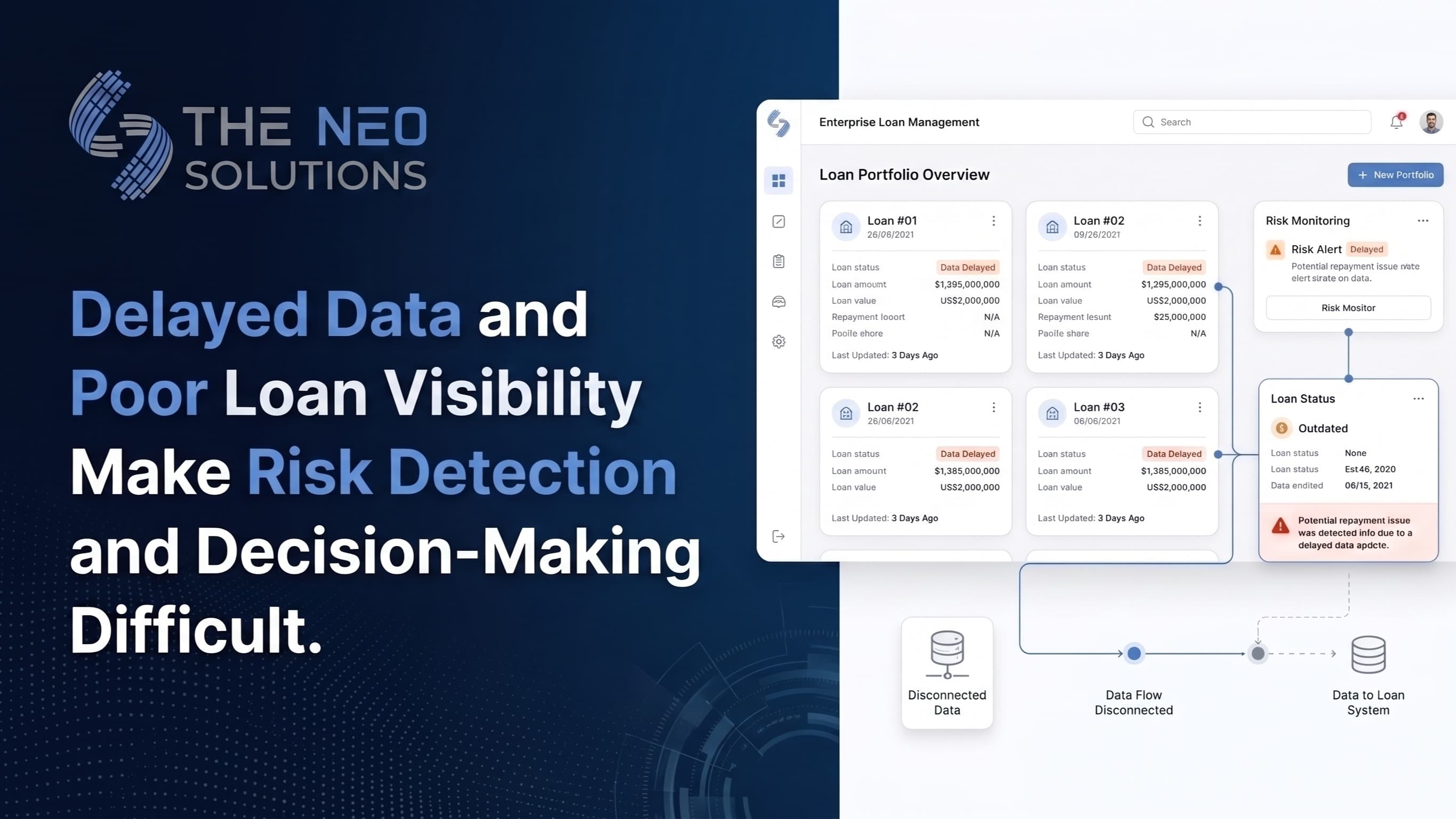
For decades, loan tracking relied on static databases that updated through nightly batch files. Underwriting teams, loan officers, and risk managers worked with delayed information, frequently reviewing borrower profiles and credit metrics that were already hours or days out of date. This decision latency introduced significant operational friction across every department.

When loan officers rely on outdated status logs, application handoffs between origination, credit review, and legal compliance stall. Borrowers are forced to call support teams repeatedly for basic updates regarding their application progress. Furthermore, risk management teams remain unaware of sudden credit deteriorations or liquidity changes until formal monthly reports are compiled, leaving the institution exposed to preventable losses.
The Rise of Digital Loan Tracking Platforms
To eliminate operational delays and improve visibility, leading lenders have transitioned toward digital loan tracking ecosystems. A modern digital loan tracking infrastructure replaces disconnected spreadsheets with a single, synchronized source of operational truth.
Deploying an integrated loan visibility platform connects every stage of the lending process. Front-end consumer applications, credit bureau data streams, underwriting rules engines, and core accounting ledgers exchange data continuously. This real-time synchronization transforms loan lifecycle tracking from a passive, historical record-keeping exercise into an active operational asset that drives faster decision-making and protects institutional capital.
Core Benefits of Real-Time Loan Tracking for Lenders
Implementing a comprehensive loan monitoring system provides immediate operational advantages across every stage of the credit pipeline. By replacing manual interventions with automated tracking tools, financial institutions capture value across several key areas.
Accelerated Approvals and Live Loan Status Updates
In modern lending, speed is a primary competitive advantage. Borrowers frequently choose financial partners who can evaluate applications and disburse funds quickly. Utilizing modern lending process tracking tools allows institutions to eliminate administrative delays during loan origination.

With an automated loan approval tracking engine, incoming files pass through preliminary eligibility checks programmatically. If an application requires additional verification, the system flags the specific requirement immediately. Borrowers and loan officers receive live loan status updates directly through web portals or mobile apps. This automated transparency reduces incoming customer service queries, speeds up document collection, and drastically reduces total turnaround time from application to disbursement.
Enhanced Loan Portfolio Monitoring and Risk Control
Maintaining long-term portfolio quality requires continuous surveillance. Static annual reviews or quarterly audits fail to capture rapid shifts in borrower financial health, particularly during periods of macroeconomic volatility.

Deploying dynamic loan portfolio monitoring tools gives risk officers real-time visibility over concentration risks, credit rating migrations, and collateral values. The credit portfolio tracking system monitors active balances continuously, evaluating borrower transaction patterns and debt usage against historical baselines. If a borrower exhibits early signs of distress, the automated loan risk monitoring engine alerts risk managers immediately, enabling proactive restructuring conversations before a default event occurs.
Streamlined Payment Tracking for Loans and Servicing Automation
Post-disbursement operations require precise balance tracking, interest calculations, and payment collection schedules. Relying on manual data entry to reconcile monthly payments across thousands of active accounts increases operational expenses and causes accounting discrepancies.
Modern loan servicing automation software integrates directly with local clearing houses and payment gateways. The system executes payment tracking for loans automatically, matching incoming funds against active schedules in real time. When an account enters early delinquency, the loan collection monitoring module triggers automated reminders across digital channels. This automated approach improves recovery rates, lowers administrative overhead, and keeps the institution's general ledger perfectly synchronized.
Technical Pillars of a Modern Loan Monitoring System
Real-Time Lending Analytics and Reporting Dashboards
Executive leadership and operational managers require clear, actionable data to optimize lending strategy. Static, end-of-month PDF reports cannot provide the operational agility needed in fast-moving markets. Modern loan operations software features dynamic, interactive dashboards that display real-time lending analytics.

A centralized loan reporting dashboard consolidates data from origination, risk assessment, and core servicing systems into unified visual feeds. Operations managers can track application volume trends, monitor individual loan officer processing speeds, and identify workflow bottlenecks instantly. Simultaneously, chief risk officers can analyze live loan performance monitoring data to adjust credit policies dynamically as market conditions evolve.
Cloud Loan Management Architecture and API Connectivity
Legacy on-premise core banking software often struggles to support high-speed data exchanges. Modern financial institutions rely on cloud loan management architectures built around modular, API-first design principles.
Hosting lending operations on cloud infrastructure provides elastic scaling capabilities, allowing systems to handle sudden application surges during promotional campaigns without performance degradation. Open API connectivity allows the loan visibility platform to integrate seamlessly with external data sources, including credit bureaus, fraud verification registries, asset valuation databases, and payment networks. This connected architecture ensures that loan data monitoring remains fast, secure, and fully compliant with data residency regulations.
AI Loan Tracking and Predictive Borrower Insights
Integrating artificial intelligence into loan management platforms transforms basic data tracking into a predictive risk management asset. Advanced AI loan tracking engines process continuous data streams to identify subtle operational and risk patterns that human analysts might miss.

By evaluating real-time borrower insights, machine learning algorithms can predict the probability of early repayment, potential delinquency, or customer churn. For instance, if an active business borrower experiences a sudden drop in point-of-sale transaction volume, the predictive system alerts account managers to review the facility. Conversely, if a retail borrower shows consistent income growth, the platform can automatically trigger targeted cross-selling offers for credit line expansions, maximizing customer lifetime value.
Differentiating Consumer and Business Loan Tracking Needs
High-Velocity Consumer Loan Tracking Systems
Consumer credit options, including personal loans, auto financing, and credit cards, are defined by high transaction volumes and standardized terms. Success in consumer lending depends on raw processing speed and automated execution.

A specialized consumer loan tracking platform handles high-volume data streams effortlessly. The system tracks individual applications programmatically through identity verification, scoring algorithms, contract generation, and immediate capital disbursement. Live loan progress tracking interfaces keep consumers informed via mobile push notifications, eliminating phone calls to support teams and delivering a seamless modern borrowing experience.
Complex Business Loan Tracking and Commercial Portfolio Management
Commercial and corporate lending presents a vastly different operational challenge. Business facilities involve complex corporate structures, syndication participation, multi-layered collateral packages, and strict financial covenants. Therefore, a generic retail platform cannot support business loan tracking requirements effectively.
Financial institutions require robust enterprise loan tracking systems built specifically for commercial portfolios. This software tracks rolling inventory lines, monitors equipment valuation changes, and verifies financial covenant compliance automatically. By connecting directly to corporate accounting systems via secure APIs, the platform evaluates real-time business financial health, alerting relationship managers if a commercial client breaches agreed-upon debt service coverage ratios.
Implementing End-to-End Real-Time Loan Tracking
Key Evaluation Criteria for Enterprise Loan Tracking Software
Selecting the ideal technology platform is a major strategic commitment that impacts a financial institution's operational capabilities for years. When evaluating a potential lending software provider, leadership teams must look beyond general marketing claims and assess technical capabilities rigorously.

A premier automated lending platform must deliver true end-to-end loan tracking across every phase of the loan lifecycle. Working with a software partner that offers pre-built connectors for local credit bureaus, identity registries, and payment systems ensures faster implementation timelines and reduces project execution risks.
Change Management and System Integration Best Practices
Replacing deeply entrenched legacy monitoring software introduces operational risks if managed poorly. To execute a smooth digital migration, financial institutions should adopt a phased deployment strategy rather than a risky legacy system shutdown.

Institutions often deploy the new real-time loan tracking layer alongside existing core accounting ledgers, connecting the platforms via secure microservices. This hybrid approach allows risk and operations teams to validate real-time tracking performance on a single product line, such as consumer cash loans, before scaling the platform across complex commercial facilities. Comprehensive user training ensures that loan officers, underwriters, and recovery teams can leverage the platform's full analytical power effectively.
8. Conclusion
Adopting real-time loan tracking is an urgent operational requirement for financial institutions seeking to maintain a competitive advantage in modern credit markets. By replacing slow manual tracking methods with synchronized digital workflows, commercial lenders can accelerate approval times, lower operational costs, and deliver the transparent, high-speed financing experiences that modern borrowers demand.
Achieving sustainable long-term growth requires replacing fragmented legacy systems with unified, data-driven lending technologies. Deploying a modern loan tracking platform allows financial organizations to safeguard their capital reserves, price portfolio risk accurately, and optimize credit operations across the entire enterprise. If your institution is ready to modernize its lending architecture, scheduling a comprehensive technical demonstration with an enterprise software partner is an ideal next step.