
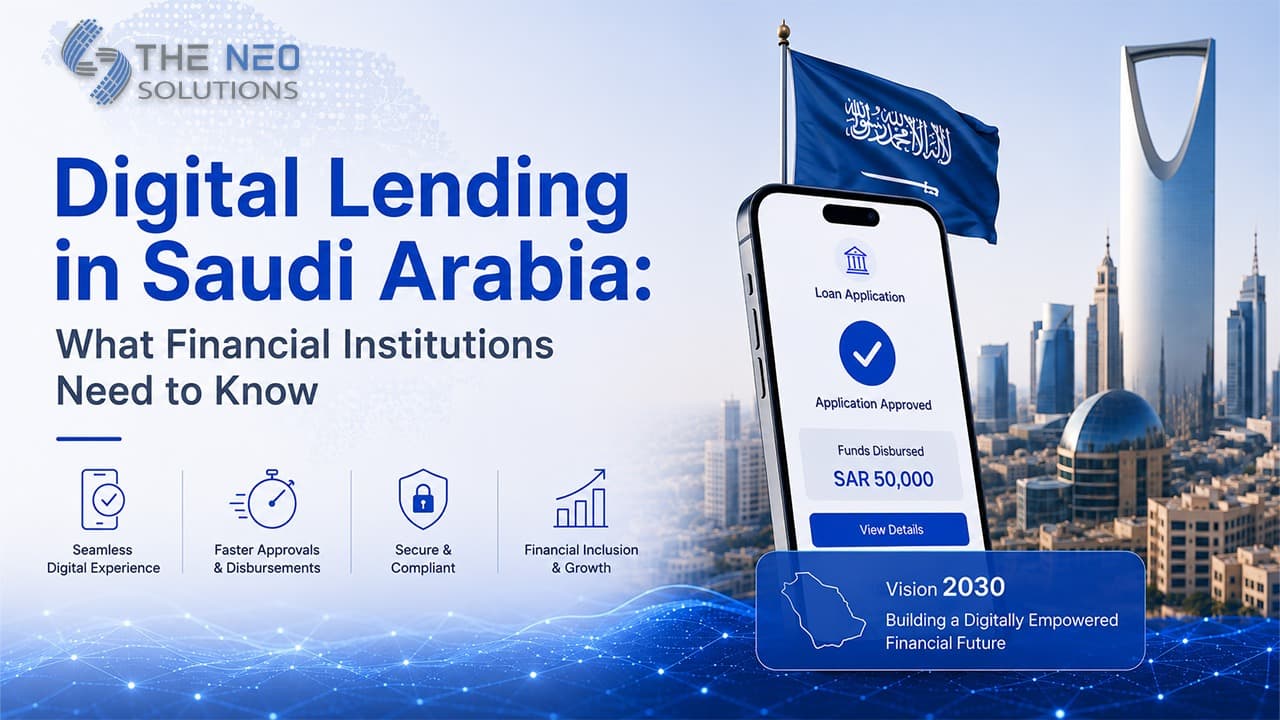
Digital Lending in Saudi Arabia: What Financial Institutions Need to Know
The financial sector in the Kingdom of Saudi Arabia is going through a massive transformation. Driven by the ambitious goals of Vision 2030, traditional banking models are rapidly evolving into agile, digital ecosystems. At the heart of this revolution is the rise of digital lending in Saudi Arabia, a shift that is changing how consumers and corporations access capital. For financial institutions, banks and non-banking financial companies, adopting these digital mechanisms is no longer optional. It is a critical requirement to remain competitive in a fast-changing market.
In this comprehensive guide, we will explore the core pillars of the Saudi credit landscape. We will examine how regulatory frameworks, sophisticated software and shifting consumer habits are reshaping the financial landscape. Readers will learn about the key technologies needed to deploy a modern, legally aligned lending platform, from initial application processing to automated underwriting and risk mitigation.
The Shift Toward Fintech Lending in Saudi Arabia
Driving Forces Behind the Saudi Digital Lending Platform Boom
Several major developments have accelerated the adoption of digital finance across the Kingdom. Government initiatives designed to reduce reliance on cash and boost financial inclusion have laid a strong foundation. The Saudi Central Bank, commonly referred to as SAMA, has been highly proactive in creating a regulated yet flexible environment. By launching regulatory sandboxes and issuing clear licensing guidelines, the authorities have encouraged fintech lending in Saudi Arabia startups to collaborate directly with established banks.
Furthermore, the physical infrastructure of the country has advanced rapidly. High smartphone penetration rates, widespread high-speed internet access and a tech-savvy population mean that digital channels are preferred over physical branches. Financial firms in Saudi Arabia that use an advanced digital credit platform can tap into a market that expects instant access to capital without the burden of excessive paperwork.
Changing Consumer Expectations in Retail Lending Platforms in Saudi Arabia Systems
Modern retail borrowers expect their financial interactions to match the speed and convenience of e-commerce platforms. A consumer looking for a personal loan or an automotive financing package will rarely tolerate waiting days for an approval decision. This change in user behavior requires banks to rethink their customer acquisition strategies.
By implementing a modern retail lending platform, Saudi Arabian companies can deliver quick, transparent and seamless application experiences. Borrowers want to upload their identification papers, verify their income streams and receive funds directly into their accounts within minutes. Financial enterprises that fail to provide this level of convenience risk losing market share to nimble digital challengers who rely heavily on online lending platform KSA architectures.
Understanding the SAMA Compliant Lending Platform Requirements
The Importance of a SAMA Compliant Loan Software Infrastructure
Operating a financial services company in Saudi Arabia requires strict adherence to local rules. SAMA maintains strict oversight to protect consumers, preserve financial stability and ensure data integrity. Any organization launching a digital lending program must build its operations on a SAMA-compliant lending platform.

Compliance is not a feature that can be added as an afterthought. It must be woven into the very fabric of the software architecture. A SAMA-compliant loan software system ensures that interest rate disclosures, consumer data handling and collection practices conform to national regulations. This reduces regulatory risks and protects institutions from heavy fines or operational suspensions.
Cybersecurity Guidelines for Cloud Lending Platform in Saudi Arabia Implementations
As financial groups move away from legacy on-premise systems, cloud computing has become a major focus. Deploying a cloud lending platform in Saudi Arabia model offers excellent scalability, lower maintenance costs and faster software updates. However, moving financial operations to the cloud requires careful compliance with the cybersecurity mandates defined by SAMA and the National Cybersecurity Authority.
Data residency is a critical factor here. Financial institutions must ensure that all sensitive consumer information, credit histories and transaction records stay within the physical borders of Saudi Arabia. When working with global cloud infrastructure firms, lending software vendors must offer localized cloud configurations. This setup ensures that data processing satisfies both operational efficiency goals and national security regulations.
Core Components of a Modern Loan Origination System in Saudi Arabia
Seamless Digital Loan Processing in Saudi Arabia Frameworks
The customer journey begins at the origination stage. A legacy loan origination system in Saudi Arabia relies on manual data entry, physical signatures and fragmented document verification. This approach slows down operations and introduces human error.
In contrast, a modern digital loan processing solution in Saudi Arabia automates data gathering right from the start. Through integrations with national databases like Yakeen and Nafath, the software instantly verifies the identity of an applicant. Employment histories, salary details and commercial records can be pulled dynamically. This reduces the application process to a few simple clicks for the user, while ensuring the financial institution collects clean, authenticated data.

Accelerating Decisions with a Lending Decision Engine in Saudi Arabia
Once an application is submitted, the system needs to evaluate risk instantly. This is where a lending decision engine in Saudi Arabia comes into play. Instead of sending files to a human credit committee for standard retail products, the software processes data against predefined business rules and credit algorithms.
A decision management system banking framework allows risk managers to adjust credit policies without writing new code. If a bank decides to change its debt-to-income ratio thresholds for a specific segment, the policy can be updated in the system immediately. This agility ensures that the credit decision software in Saudi Arabia platform evaluates risk consistently, fairly and without delays.
Optimizing Lifecycle Management with a Loan Management System in Saudi Arabia
Corporate Lending Software vs. Retail Platforms
While retail lending focuses on high volumes and automated decisions, corporate lending demands a different approach. Large-scale business financing involves complex organizational structures, multiple stakeholders and customized covenants. Therefore, a generic platform cannot handle both types of lending efficiently.

Financial organizations need a robust corporate lending software in Saudi Arabia module to manage large commercial accounts. This enterprise lending software technology tracks syndicate arrangements, multi-currency facilities and complex repayment schedules. Concurrently, a dedicated retail platform handles simple consumer loans, credit lines and credit card applications. This separation ensures that both business lines operate with the right tools.
Commercial Lending Software KSA Solutions for the SME Sector
Small and medium enterprises form the backbone of the growing Saudi economy. Historically, SMEs have struggled to secure financing due to strict collateral demands and lengthy evaluation processes. With specialized commercial lending software KSA tools, lenders can now address this underserved market profitably.
These platforms allow institutions to evaluate SME health by looking at real-time cash flows, VAT filings and point-of-sale transaction histories. By connecting a loan management system in Saudi Arabia solution to corporate accounting portals, banks can offer flexible working capital lines. This approach supports the economic diversification goals of Vision 2030 while opening up a profitable new revenue stream for lenders.
The Role of Lending Workflow Automation KSA
Eliminating Manual Bottlenecks in Financial Institution Software in Saudi Arabia
Even with great user interfaces, a lending operation can stall if back office workflows remain manual. If internal tasks require employees to email spreadsheets or manually print credit memos, operational costs will remain high. Implementing lending workflow automation KSA tools solves these operational bottlenecks.
Automated workflows ensure that once an application passes the initial screening, it moves to the next stage instantly. If a complex file requires secondary human approval, the system assigns it to the correct officer based on workload and authority limits. By using automated financial institution software platforms, companies cut processing times from weeks to hours, leading to higher customer satisfaction and lower overhead.
Integrating Enterprise Lending Software in Saudi Arabia with Existing Banking Architectures
A modern digital credit tool cannot operate as an isolated silo. To maximize its value, it must connect seamlessly with core banking technology solutions in Saudi Arabia networks already in place. This includes deep integrations with customer relationship management tools, general ledgers and payment gateways like SADAD and Sarie.

When an enterprise lending software in Saudi Arabia solution is fully integrated, funds can be disbursed automatically upon contract signing. Repayments can be scheduled through direct debit systems, reducing manual tracking for accounting teams. This end-to-end connectivity turns a standalone platform into an essential component of the bank's core technology suite.
Advanced Credit Underwriting and Risk Analytics
Utilizing Data within Credit Decision Software in Saudi Arabia
Accurate risk assessment is critical for any sustainable lending operation. In Saudi Arabia, the Saudi Credit Bureau, known as SIMAH, provides foundational credit data. Modern credit decision software in Saudi Arabia tools connect directly to SIMAH via secure application programming interfaces.
This direct connection allows the system to pull historical payment records, outstanding liabilities and credit scores instantly. Advanced systems go a step further by incorporating alternative data. By evaluating utility payment records, commercial registration status and transaction histories, the platform creates a comprehensive risk profile for the applicant. This allows lenders to approve more borrowers safely while keeping default rates low.
Implementing Advanced Loan Underwriting Software in Saudi Arabia
Underwriting is where risk policies meet real-world data. Using outdated underwriting practices often leads to high rejection rates for viable borrowers or unexpected defaults. By adopting modern loan underwriting software in Saudi Arabia, institutions can apply predictive analytics to their portfolios.
These platforms use machine learning models to identify subtle risk patterns that human analysts might miss. For instance, the system might discover that applicants from a certain industry segment show higher default tendencies during specific seasonal cycles. These insights enable risk teams to refine their credit rules proactively, protecting the bank's capital throughout economic shifts.
Managing Post-Approval Operations: Collections and Compliance
Streamlining Recovery with a Collection Management System in Saudi Arabia
A comprehensive digital lending strategy must cover the entire loan lifecycle, including repayment and recovery. When economic conditions change, collection teams face higher workloads. Relying on manual call sheets and uncoordinated follow-ups is inefficient and hurts the customer relationship.
Deploying a collection management system in Saudi Arabia module helps automate early-stage interventions. The loan collections software KSA tool segments past-due accounts based on risk profiles, payment history and delinquency duration.
Low Risk Accounts: Automated SMS and email reminders with direct payment links.
Medium Risk Accounts: Scheduled interactive voice response calls and digital notices.
High Risk Accounts: Direct routing to specialized recovery agents with complete history access.
This targeted approach ensures that collection teams focus their energy where it matters most, improving recovery rates while keeping operational expenses low.
Meeting Financial Standards with IFRS 9 ECL Software in Saudi Arabia
Compliance in the banking sector extends beyond consumer protection rules to rigorous accounting standards. International Financial Reporting Standard 9, or IFRS 9, requires financial institutions to calculate and set aside reserves for expected credit losses rather than waiting for an actual default to occur.
To handle this complex calculation, institutions rely on specialized IFRS 9 ECL software in Saudi Arabia modules. These tools connect directly to the underlying banking accounting module system. By evaluating the risk rating of every active loan, tracking macroeconomic indicators and estimating future defaults, the expected credit loss software in Saudi Arabia platform calculates necessary provisions accurately. This automation ensures the bank remains compliant with global accounting standards and SAMA regulations, avoiding reporting discrepancies.
Selecting the Right Lending Software Provider in Saudi Arabia
Key Factors When Reviewing a Saudi Banking Software Company
As demand for digital transformation grows, financial institutions face a crowded marketplace of software vendors. Choosing the right partner requires a thorough evaluation process that goes beyond comparing feature checklists. Lenders must look for a tech partner with deep local experience.

A reputable Saudi banking software company understands the specific needs of the local market. They will have pre-built connectors for local entities and offer an interface that fully supports Arabic and English workflows. Working with an experienced lending software provider in Saudi Arabia ensures faster implementation times and fewer project delays.
Moving from a Loan Software Demo in Saudi Arabia to Full Scale Deployment
Before signing a long-term contract, financial executives should request a comprehensive loan software demo in Saudi Arabia session. This demonstration should evaluate how the system handles complex, real-world scenarios, rather than just showing a polished sales pitch. Lenders should look at how easily a business analyst can change a credit rule, generate an audit trail, or resolve a stuck application.
Once satisfied with the system's capabilities, institutions often choose to buy a lending platform in Saudi Arabia access via a phased rollout. Starting with a minimum viable product for a single loan type, like consumer cash loans, allows the team to test the platform safely. After verifying system performance, the bank can scale up to launch corporate lending software in Saudi Arabia, featuring complex commercial facilities and automated collection workflows across the enterprise.
8. Conclusion
The expansion of digital lending in Saudi Arabia represents a major shift in how financial services operate across the Kingdom. By adopting modern loan origination frameworks, automated decision engines and integrated compliance tools, banks and financial institutions can lower operational costs while offering the fast, digital experiences that modern clients expect.
To thrive in this competitive environment, institutions must choose flexible, scalable technology that fits perfectly into the local regulatory framework. Partnering with an experienced vendor and deploying a SAMA-compliant lending platform allows financial organizations to safeguard their operations, manage risk effectively and support the long-term financial transformation of Saudi Arabia. If your organization is ready to upgrade its infrastructure, booking a comprehensive software demonstration is an excellent next step to building a modern lending business.